
 EN
Quick Links

Cordless table lamps move through a busy restaurant every day: from a dining table to a collection point, a charging station, storage and back again. Fingerprints and food residue are ordinary possibilities, but an unsuitable cleaning method can damage a finish, markings, seals or electrical contacts. A good care plan therefore starts with the instructions for the exact lamp and the restaurant’s actual cleaning routine.
For buyers evaluating the JB-TL01 flip table lamp, this guide explains what to ask the supplier, how to organize a practical inspection workflow and what to record before a larger rollout. The steps are a planning framework, not a substitute for the current manufacturer instructions or the venue’s own safety procedures. Do not assume that a method suitable for one cordless lamp is approved for another.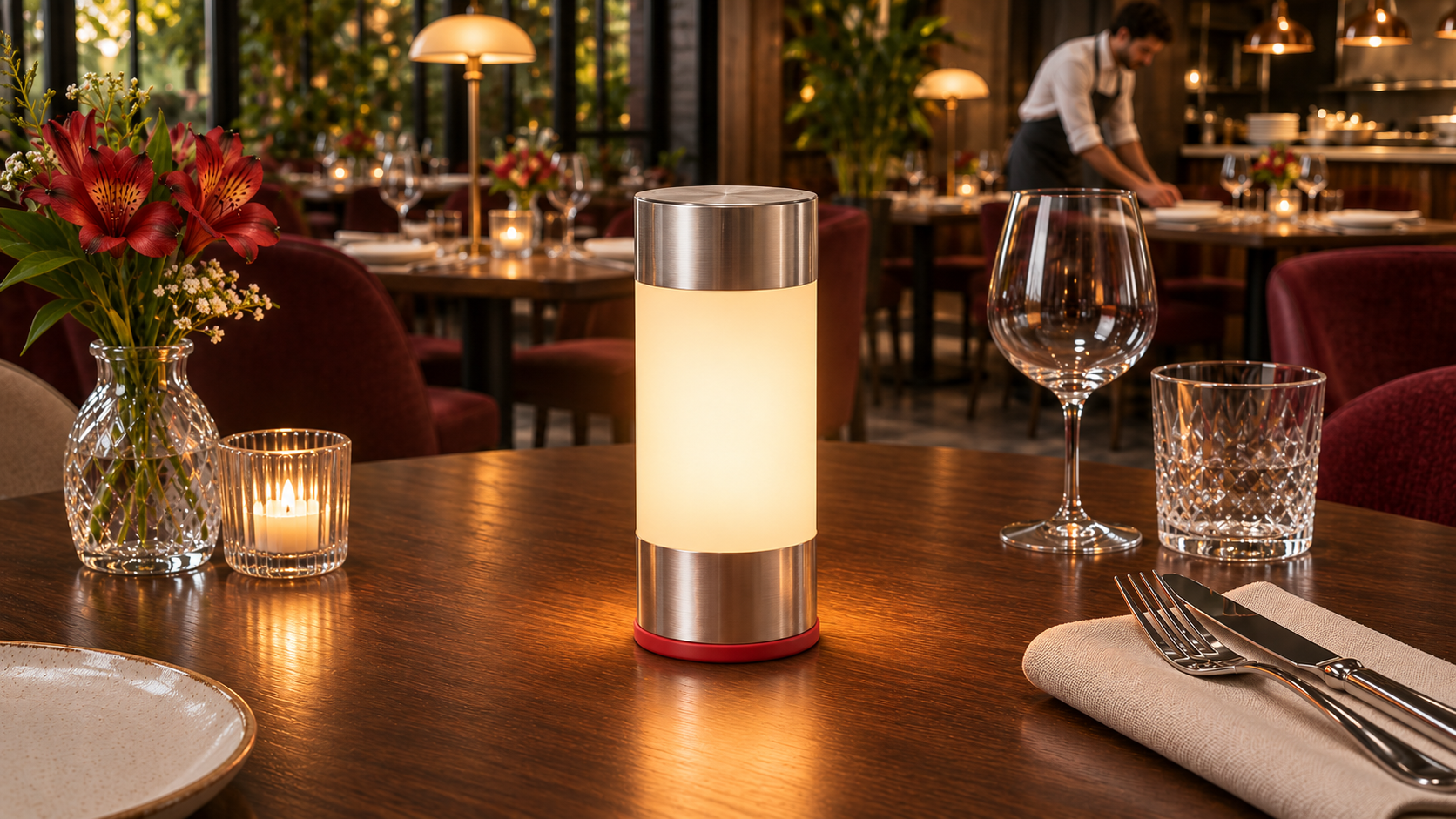
Obtain the supplier’s current written care and charging instructions for the exact model, finish and accessories. Separate cleaning from charging, disconnect power before maintaining the station as instructed, keep liquid away from electrical interfaces and return a lamp to service only after the supplier’s approved procedure and inspection are complete.
Do not spray a lamp or station directly, immerse it, or use a chemical simply because it is common in a dining room. Ask the manufacturer which materials, cleaning agents, cloths and drying conditions are approved. If the instructions do not cover a particular substance or a spill, hold the affected unit and ask the supplier before proceeding.
A lamp may be attractive during sample approval but difficult to manage across dozens of tables. Staff need to know who collects it, where it is inspected, which cloth or product is approved, when it can be charged and how to identify a unit that should be held aside. A routine that depends on an undocumented assumption is hard to repeat between shifts or properties.
The cleaning plan also affects purchasing. A hospitality buyer should discuss intended use, frequent table turnover, finish, branding and the venue’s approved cleaning program with the supplier before committing to a configuration. The right result is a documented method both the venue and the supplier can support, rather than an unsupported promise that every cleaner is suitable.
List where the lamps will be used, who handles them, what types of incidental contact are expected, and how tables are reset. Explain whether staff expect to use dry cloths, water-based products or a particular approved facility cleaner. Provide the product’s safety information and intended dilution to the supplier; do not assume a cleaner is compatible without confirmation.
For projects with different venues, compare procedures across sites. An operator may standardize one lamp, but each location can have different cleaning products or staff arrangements. Resolve those differences before approving the final care instructions.
The supplied JB-TL01 information describes a stainless-steel and acrylic lamp with a selected ambient color in its normal position and a visible solid-red alert when flipped with the red ring up. It describes four brightness levels and charging through a compatible contact station, with no Type-C charging port on the lamp. Confirm the current sample, finish, configuration and instructions with the supplier before ordering.
Those details help define the questions to ask; they do not establish that every stainless-steel cleaner, disinfectant or wet method is safe for every surface. Finishes, markings, seals and contacts may need different handling. The product information refers to waterproof construction but does not provide a verified IP rating or cleaning protocol here, so buyers should obtain the specific documentation instead of inferring immersion or outdoor suitability.
The charging station is part of the system. Request separate instructions for the lamp body, any visible contacts, station contacts, power supply and cable. Ask how to isolate power, which surfaces staff may touch, what should be kept dry and what to do if the station has been exposed to liquid. Follow the supplied instructions and local electrical procedures.
Confirm the exact station and plug configuration in the quotation. A lamp that looks similar to another model is not proof of accessory compatibility. Ask for a current instruction sheet that matches the purchased SKU and destination market.
A simple process can make a restaurant’s lamp fleet easier to manage. Define each step and assign it to a role rather than leaving lamps on a charging shelf without a clear handover.
Collect lamps from tables according to the venue’s service plan. Place units needing attention in a designated hold area, separate from the lamps ready for the next service. Do not place an obviously damaged or wet unit on a charger. If the station or power supply appears damaged, isolate it according to the supplier’s instructions and venue procedures and seek qualified assistance.
Avoid stacking lamps in a way that scratches finishes or puts pressure on the diffuser. A tray with suitable dividers may help, but the buyer should check that its material and dimensions are compatible with the approved product and local workflow.
Look for visible cracks, loose parts, damaged markings, residue, exposed or damaged components, unusual heat, odor or other abnormal conditions. Record what was observed without guessing the cause. An employee should not open a battery-powered lamp, attempt to repair internal parts or continue using a unit that shows signs of damage without manufacturer guidance.
If there is a spill, do not invent a recovery procedure. Separate the affected lamp, prevent it being charged or returned to a table and obtain model-specific advice. The same principle applies to a wet station or connector.
Follow the supplier’s written procedure for the approved cloth, material, cleaning agent and application method. Where the instructions call for a cloth, apply only the amount and technique approved by the supplier; keep moisture away from openings and contacts. Do not use abrasive pads, solvents or concentrated chemicals unless the manufacturer specifically authorizes them for that exact finish and application.
A restaurant’s hygiene requirements remain important. If the supplier’s approved method does not meet the venue’s intended cleaning process, raise the conflict before the order. Ask for compatible alternatives or a different finish; do not improvise by applying a stronger product to the whole fleet.
Complete the manufacturer’s required drying and inspection steps before placing a lamp on compatible equipment. Inspect the station and power supply according to their instructions and use the correct plug and supply for the destination. Do not use moisture or metal tools on contacts unless a qualified person following the manufacturer’s written instructions is authorized to do so.
Record any lamp that cannot be cleared for service. If the station has insufficient capacity or the cleaning step delays charging, revise the workflow or project quantities. Do not shorten a required drying or inspection step just to meet a service deadline.
Before opening, confirm that each ready lamp matches the approved zone configuration and operates as expected under the supplier’s instructions. For a flip-to-call lamp, the team should know the difference between the selected ambient position and the visible red service alert. Train staff to recognize and respond to the cue; the described red light does not by itself establish a phone, watch or pager connection.
Keep a separate count of checked, charged reserve lamps. When a spare is moved to a table, update the record and decide how to restore the reserve. For a method to calculate active, rotation and reserve quantities, see How Many Spare Cordless Table Lamps Should a Restaurant Order?.
Planning a restaurant lamp fleet? Tell Jbian Lighting about your table count, cleaning products, charging window and destination. Request the current care instructions and compatible JB-TL01 configuration. Send Your Requirements.
Start with a representative sample in the finish, marking and configuration intended for the actual purchase. Ask the supplier to identify the materials and any approved cleaning products, concentration, cloth type, application method and limitations. Request instructions in writing, including how to treat the charging contacts and what to do after a spill.
If the buyer wants a compatibility trial, agree on a written protocol with the supplier before applying anything. Specify the sample, surface, cleaning agent, method, number of repetitions, inspection criteria and who records the observations. The trial should not be represented as a certification, a laboratory result or a guaranteed lifetime unless appropriate evidence supports that claim.
Look at the diffuser, metal surfaces, markings, end caps and areas around contacts. A cleaner that appears acceptable on one component may affect another. Consider the logo and packaging configuration as well: a custom marking can introduce its own approval questions. Compare the sample before and after any supplier-approved trial and document any visible change.
Agree on what constitutes an acceptable result for the project. If there is uncertainty, pause and ask the supplier rather than extrapolating from appearance. Keep the approved sample reference, photographs of the actual sample and written responses with the purchase record.
A practical buyer does not need to assume that every chemical must be compatible. Ask whether an alternative approved method satisfies the venue’s requirements, whether the project needs a different finish, and who will update staff instructions. If no solution is confirmed, record the limitation before placing the final order.
Contacts connect the lamp to its compatible station, so a restaurant should treat them as electrical interfaces rather than ordinary table surfaces. Ask the supplier how to inspect them, what constitutes contamination or damage, and whether staff may perform any contact cleaning. Follow instructions on disconnecting power and keeping the station dry.
Do not scrape contacts, introduce liquid into a station, use an unapproved chemical or attempt to disassemble the equipment. If contact performance is uncertain, record the symptoms and ask for guidance. Similar-looking accessories may have different electrical and mechanical requirements.
Plan the station area around access and responsibility. Staff should be able to identify compatible lamps, keep the area clear, follow cable-management instructions and remove questionable equipment from use. Confirm ventilation and placement requirements with the manufacturer; do not infer a suitable arrangement from an illustrative image.
A useful record can be a printed checklist beside the collection area or a shared file across properties. It should identify the lamp model and finish, station configuration, current instruction revision, approved materials, responsible role and escalation contact. Record the date and observed condition of any held unit.
Use plain statuses: ready for service, awaiting approved care, charging, and held for review. A lamp should appear in only the status that reflects its actual condition. For a multi-site project, add the location and identify whether a central reserve can reach the restaurant in time.
During initial operation, ask staff whether the routine fits the available time and whether the approved materials are available at every shift. Record observations rather than assigning a failure cause without evidence. If handling creates a bottleneck, discuss trays, collection timing, staffing, station placement or inventory with the operations team and supplier.
Review the written process whenever the supplier changes the model, finish, branding or station configuration, or whenever the venue changes its cleaning products. An instruction sheet approved for one configuration should not automatically be transferred to a different SKU.
Provide the model, intended number of lamps, location, service schedule and preferred finish. Then ask for:
These questions help compare offers on the same scope. A low lamp-only price does not include the value of a compatible station, documented care, replacement support or freight unless those items are specifically listed.
Only if the manufacturer confirms the specific product, concentration, surface and application method for the purchased model and finish. A general claim about metal or acrylic is not enough to establish compatibility for the complete assembly.
The supplied product description mentions waterproof construction, but no verified IP rating or immersion instructions are available in this guide. Do not assume immersion or running water is approved; obtain model-specific instructions from the supplier.
Separate cleaning and charging unless the manufacturer explicitly provides a safe procedure. Follow the lamp and station instructions, including isolation of power where required, and keep moisture away from electrical contacts.
Set a schedule based on the supplier’s instructions, the venue’s operating conditions and local requirements. A visible check during collection and before the next service can be incorporated into a routine, but this guide does not establish a universal interval.
Do not assume the battery is user-replaceable. Ask the supplier for the approved service and warranty process. Staff should not open or repair the lamp without manufacturer authorization and appropriate qualifications.
Remove it from service and charging, record the observed condition and contact the supplier for model-specific guidance. Follow the venue’s safety procedures and do not attempt an improvised repair.
A workable care plan connects the supplier’s written instructions with the restaurant’s actual collection, inspection, charging and service routine. Specify the intended cleaning products before ordering, confirm compatibility with the exact finish and station, and give staff a clear way to hold a questionable unit.
For JB-TL01, verify the current configuration, care instructions and compatible contact charging equipment with Jbian Lighting. Review the process after opening and update it when the product or venue procedures change.
Share your table count, service schedule, destination, preferred finish and cleaning requirements. Jbian Lighting can provide current JB-TL01 configuration details and an itemized quotation for the requested lamps and compatible stations. Get a Quote.