
 EN
Quick Links

A container estimate begins with the packed product, not the size of an individual lamp. For a rechargeable restaurant table lamp system, the buyer needs to know how many lamps and charging stations are included in each carton, the external carton measurements and gross weight, and whether the freight quotation assumes loose cartons or pallets.
The JB-TL01 flip table lamp is supplied in configurations described as 15 lamps plus one compatible charging station or 25 lamps plus one compatible station. This guide uses those sets to explain how a buyer can plan a bulk order and discuss freight with a supplier. The container counts below are theoretical direct-loading estimates, not guaranteed quantities. Confirm the final carton and loading plan for every shipment.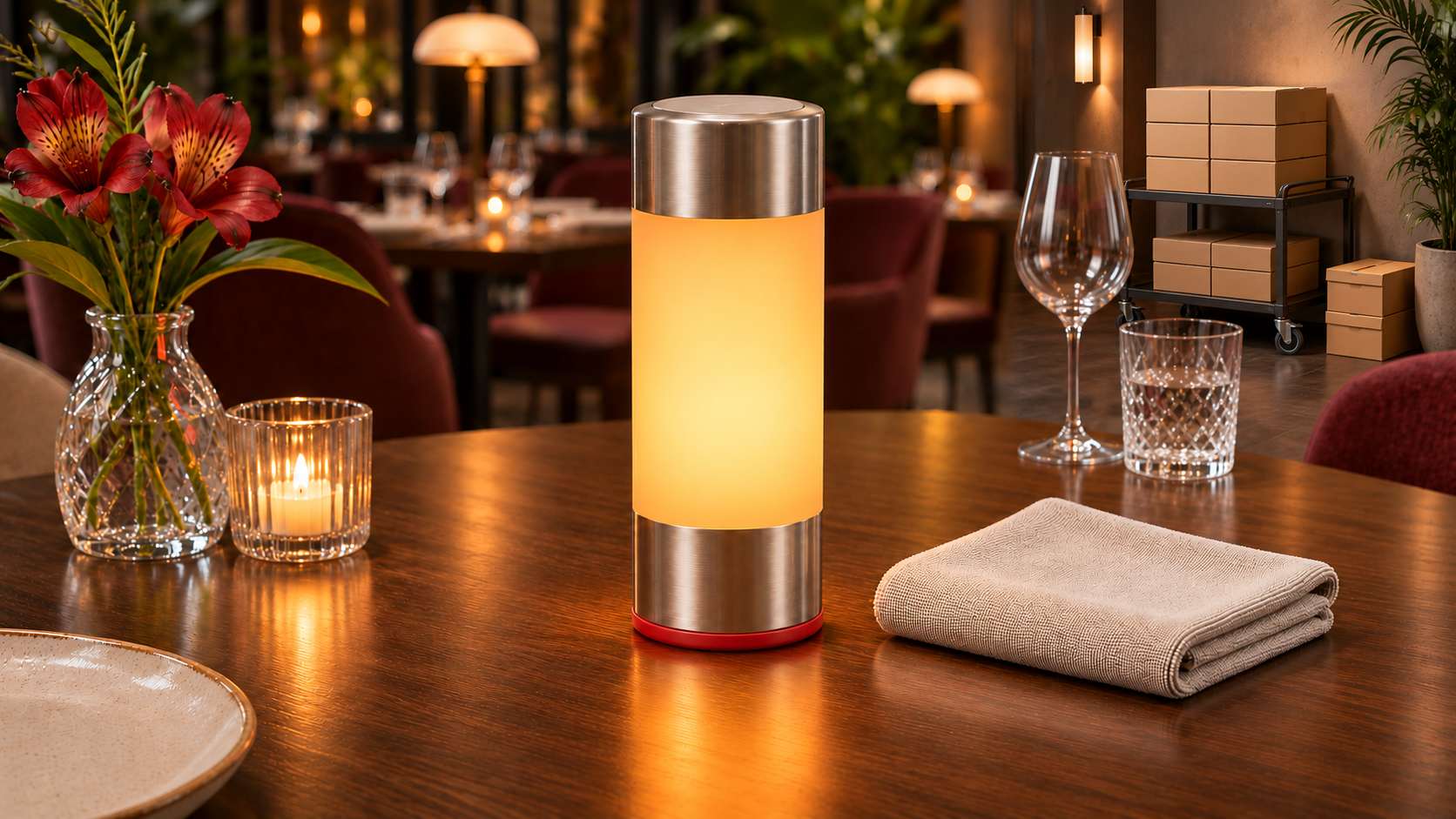
For the stated 15-lamp set, the carton measures approximately 43 × 41 × 19 cm and weighs approximately 8 kg. The supplied floor-loading estimate, without pallets, is 840 cartons in a 20GP container or 1,740 cartons in a 40GP container. At 15 lamps per carton, that corresponds to 12,600 or 26,100 lamps respectively.
For the stated 25-lamp set, the carton measures approximately 55 × 45 × 20 cm and weighs approximately 11 kg. The corresponding estimates are 572 cartons in a 20GP or 1,144 cartons in a 40GP: 14,300 or 28,600 lamps respectively. Each carton is described as including one compatible charging station.
These figures assume only one carton size in the load, direct stacking without pallets and a suitable arrangement inside the container. They do not establish that every carrier, container, route or shipment will accept the same load. Actual internal dimensions, door opening, packaging tolerances, stackability, load securing, allowable weight and operational clearance all matter.
A buyer may specify 2,000 table lamps but still need to decide how charging equipment will be supplied. If a standard carton contains a set of lamps and one station, rounding the lamp quantity to a whole number of cartons also determines a station quantity. Check whether that number fits the restaurant’s charging workflow.
For example, 15 cartons of the 25-lamp configuration contain 375 lamps and 15 stations. This is simple multiplication of the described standard set, not a recommendation that every venue needs one station per 25 tables. Confirm the actual station capacity, power supply, compatible plug and charging window with the supplier.
If the project needs a different ratio of lamps to stations, ask whether separate lamps or stations can be supplied and how they will be packed. Separate accessories change the packing list and may invalidate a full-container estimate based on identical cartons. Record the agreed contents rather than assuming an online example matches the purchase order.
Begin with the maximum number of lamps needed on tables at the same time. Then identify any additional units required for a planned charging rotation and any ready reserve chosen by the operator. Avoid counting the same lamp as both a planned rotation unit and an emergency spare.
For a practical sizing method, see How Many Spare Cordless Table Lamps Should a Restaurant Order?. Once the project quantity is known, translate it into cartons and check the resulting station count, not the other way around.
The available product information describes two configurations:
The 15-lamp carton dimensions above were confirmed by the buyer as the correct figures, replacing an older conflicting measurement. Request the latest packing specification for the actual order, particularly if the packaging, station, accessories, power supply or branding changes. Carton weight and size should be checked after the final packaging configuration is approved.
The estimates imply approximately 6,720 kg of packed goods for 840 of the 15-lamp cartons and 13,920 kg for 1,740 cartons. For 572 or 1,144 of the 25-lamp cartons, the corresponding packed-goods weights are approximately 6,292 kg or 12,584 kg. These are carton count multiplied by the stated approximate gross weight.
They do not include the container tare and may not include additional pallets, securing materials or other goods. Confirm gross mass, vehicle and port restrictions, verified container weight procedures and carrier limits with the freight provider. Never infer permission to load from the arithmetic alone.
The 15-lamp carton has a nominal volume of about 0.0335 m³, calculated from 0.43 × 0.41 × 0.19 m. The 25-lamp carton is about 0.0495 m³. Multiplying carton volume by carton count helps compare shipments, but dividing a container’s nominal volume by carton volume does not prove how many boxes physically fit.
Real loading must account for rectangular dimensions, door clearance, carton orientation, protrusions, allowable stacking, empty gaps and restraint. A theoretical arrangement may require tight tolerances that are unsuitable in practice. Ask the forwarder for a shipment-specific plan and a realistic quote.
The 25-lamp set holds more lamps in each carton, while the 15-lamp set may fit an operator’s allocation or handling needs better. The choice should reflect the whole project: simultaneous table demand, charging equipment, receiving space, staff handling, site allocation and the agreed purchase terms.
Do not choose a set solely because the theoretical full-container lamp count is higher. A single restaurant may not need a full container; a group may need separate allocations to several properties. A smaller number of cartons, mixed accessories, protective materials or palletization can change the freight calculation.
Suppose a buyer plans four restaurants and each requires 75 lamps. Four allocations of three 25-lamp cartons yield 300 lamps and 12 stations under the described standard set. Before adopting this plan, verify whether three stations per venue meet the actual charging schedule, whether each property has the correct plug and whether spare lamps are included in the 75.
If the venues instead need different station quantities, have the supplier prepare an itemized proposal and packing list. A site-level label can help receiving teams, but its content and placement should be approved. This example is arithmetic, not a record of an actual customer project.
A full shipment must also pass through the receiving door and fit the available storage area. Ask the supplier to confirm handling symbols, stacking limits, approved storage conditions and package dimensions. Compare the 8 kg and 11 kg approximate carton weights with the venue’s handling procedures; actual weights depend on the final pack.
Reserve enough time for counting and inspection before opening. If cartons are divided between locations, note which site receives which configuration, compatible station and power supply. Keep replacement stock distinct from units already committed to a planned event or rotation.
Planning a bulk shipment? Share your lamp quantity, station requirements, destination and preferred carton configuration with Jbian Lighting. Request an itemized packing and freight proposal for the actual order. Send Your Requirements.
A packing list turns a theoretical capacity into a shipment a buyer can verify. Ask the supplier to show the carton count, lamp quantity per carton, station and accessory quantities, carton dimensions, gross weight and total packed weight. If configurations are mixed, list each carton type separately.
Add carton identification and site allocation where agreed. The list should match the purchase order, commercial invoice and the actual goods. Agree how the supplier will communicate a last-minute change, such as a revised carton size or an accessory packed separately, before the shipment is released.
Record model JB-TL01, approved finish, branding, lamp color configuration, compatible station and plug standard. The supplied product brief describes ambient lighting in the normal position and a visible red service cue when the lamp is flipped. Confirm current sample behavior and production configuration; do not assume the visible signal sends an electronic message to staff.
If a buyer approves a sample with custom artwork, keep the approved artwork revision and product configuration with the purchase order. Cartons may require different internal protection or markings for a customized project. Request updated dimensions and weights whenever that changes the packed set.
The supplier and buyer should agree who checks the number of cartons, what evidence is recorded and how a short shipment or visible damage will be handled. This plan should specify timing and contacts rather than claim an inspection occurred when it did not. For delivery-stage checks, see the restaurant table lamp receiving checklist.
Send the actual packing list and the destination, route and planned shipping method to the freight provider. Ask for the applicable container interior and door dimensions, usable payload, load restraint, pallet requirements, cut-off dates and any handling limitations. Request the quote’s scope, assumptions and validity in writing.
A standard 20GP or 40GP label is a useful starting point but does not replace information for the particular container. Different equipment, local rules and carrier processes can alter the practical load. If the order is less than a full container, discuss consolidation, additional handling and the resulting delivery schedule rather than assuming a full-container rate applies.
JB-TL01 is a rechargeable lamp. Ask the supplier and freight provider to identify the battery chemistry, battery installation configuration and documents required for the actual mode, route and destination. The product brief lists UN38.3, but a purchaser should request current documents that match the battery and shipment rather than treat a marketing statement as a substitute for review.
Requirements can vary by transport mode, packaging and current rules. The shipper, carrier and qualified freight provider should determine the proper classification, packaging, marks, declarations and acceptance conditions. This article does not assign a universal shipping classification or guarantee regulatory compliance.
A commercial invoice and packing list describe the transaction and goods. Battery transport evidence, product conformity documentation and destination-specific requirements address different questions. Ask which party supplies each document, which model and battery it covers, and whether the version applies to the final shipment.
Do not rely solely on a logo, a generic certificate or an old file with a different product identifier. For a branded order, identify the manufacturer, importer and responsible parties on the documents as appropriate for the destination. Seek current professional advice for the actual transaction.
A calculation can support budgeting, but it is not a loading guarantee. Ask for the assumptions: carton dimensions, orientation, stacking, internal dimensions and whether pallets or securing space are included. A buyer’s freight agreement should use the final agreed plan.
A set-based order changes both the lamp and station count. Specify whether the power supply, plug and any agreed extras are included. Separate accessories require their own carton details and may reduce the available space for the main sets.
Use the confirmed 43 × 41 × 19 cm measurement for the standard 15-lamp carton in the supplied information, not the older conflicting figure. Check the current order-specific packing sheet if a supplier changes the packaging or the actual carton differs.
Cartons have fixed shapes and real containers have door and operational constraints. Weight, stackability and load securing can limit an arrangement even when nominal volume remains. Freight providers should check both physical fit and applicable weight limits.
A container arriving at a destination does not place the lamps on the restaurant’s tables. Plan unloading, appointment times, local delivery, receiving staff, site distribution and a safe holding area. Build the schedule around the actual freight terms and supplier confirmation.
The provided no-pallet direct-loading estimate is approximately 840 cartons, or 12,600 lamps. It is a theoretical estimate using the stated carton dimensions and requires a shipment-specific loading check.
The supplied estimate is 1,144 cartons, or 28,600 lamps, assuming identical 25-lamp cartons loaded without pallets. Actual capacity depends on the container and the final loading plan.
The supplied product information describes one compatible station with each standard 15-lamp or 25-lamp set. Confirm the exact contents, power supply and plug standard in the current quotation and packing list.
Ask the supplier and forwarder to prepare a mixed-load plan. The single-carton-type estimates cannot simply be added together because carton dimensions, orientation, space and weight must be recalculated.
No. The figures are estimates of packed goods based on approximate per-carton weights. Container tare, pallets, securing materials and any other cargo are separate considerations for the freight provider.
Provide the destination, delivery point, shipping mode, carton count, carton dimensions, gross weight, battery configuration, requested freight terms and any pallet or site-allocation requirements. Ask the forwarder to identify the documents needed for the actual route.
A useful container estimate links confirmed carton dimensions with a complete lamp-and-station configuration and a realistic loading plan. Use the JB-TL01 figures as a starting point, label the numbers as estimates, and have the supplier and forwarder verify the final packing list and transport requirements.
Tell Jbian Lighting how many lamps each location needs, your preferred set, destination, plug standard and delivery schedule. Request current carton specifications and an itemized quotation for lamps, compatible charging stations and the agreed shipment scope. Get a Quote.